
Your Estate Plan should continue to reflect the life you are actually living
Families change. Assets change. Relationships, health, priorities, and the people you trust may change. A plan that was right when it was signed should still be right when your family needs it.

The documents do not know when your life has changed
Your Estate Plan reflects the information, relationships, assets, and decisions that existed when the plan was created. Keeping it current means making sure those assumptions are still true.
The people may change
The person you originally selected as trustee, agent, healthcare decision-maker, guardian, or beneficiary may no longer be the person you would choose today.
The family may change
Marriage, divorce, births, deaths, blended-family relationships, special needs, or changes in family responsibilities may affect what you want the plan to accomplish.
The assets may change
You may buy or sell property, open new accounts, acquire a business interest, inherit assets, move property between states, or change how accounts are titled.
Some changes deserve a conversation
Not every change requires new documents. But important changes should trigger a review so you can decide whether the plan still works the way you intend.
Family and relationships
Marriage, divorce, a new child or grandchild, the death of someone named in the plan, a beneficiary's changing circumstances, or a relationship that is no longer what it once was.
Property and finances
A new home, real estate in another state, a significant account, a business or farm, a major sale, a large inheritance, or a meaningful change in how your assets are owned.
Health and responsibility
Changing care needs, incapacity concerns, retirement, a move, or learning that someone you selected is no longer willing or able to serve in the role you gave them.
Changes in law can also affect planning. You do not need to track every legal development yourself. Ongoing review gives us the opportunity to identify when a change is relevant to your plan.
A current plan also means keeping the assets coordinated
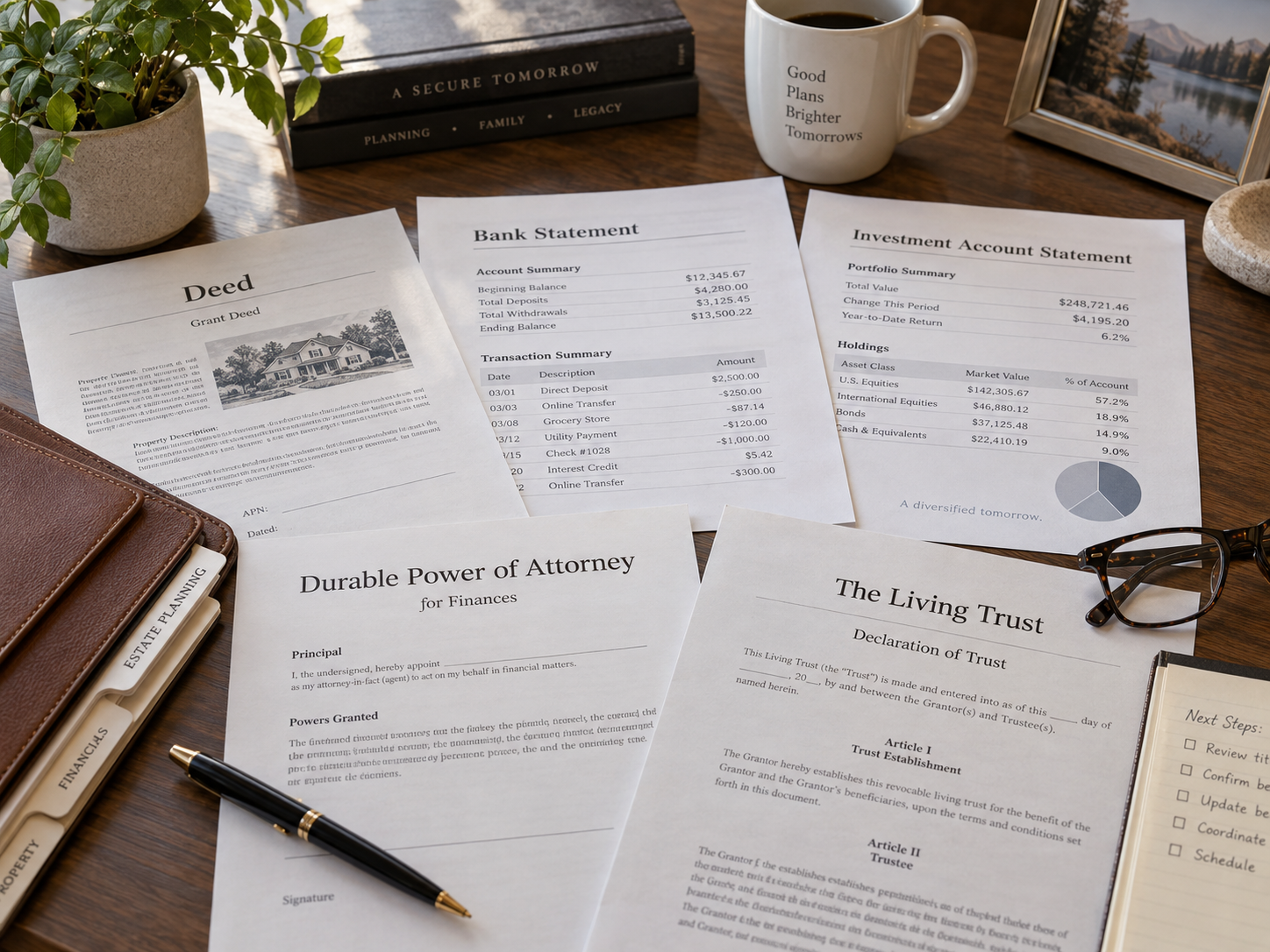
Changing the trust document is only one part of maintaining a plan. New property and accounts need to be reviewed to determine how they fit within the plan you already created.
When a Living Trust is part of the plan, newly acquired assets may need to be titled to the trust or coordinated another way. Retirement accounts, life insurance, and other beneficiary-designated assets follow their own instructions and should be considered with the rest of the plan.
Because the plan cannot control an asset simply because you intended for it to.
The first question is whether the plan still does what you want
Sometimes a review confirms that the existing plan still fits. Sometimes a small change is enough. Other times, life has changed enough that the plan needs more substantial work.
Are the right people named?
Review the people responsible for financial decisions, healthcare decisions, trust administration, guardianship, and carrying out the plan later.
Do the instructions still fit?
Consider whether the plan still reflects how you want to provide for your spouse, children, grandchildren, other beneficiaries, charities, pets, business, or property.
Do the assets still support the plan?
Review ownership, trust funding, beneficiary designations, and major new assets so the property follows the same overall strategy as the documents.
You should not have to start over every time life changes
Our relationship with a client does not end when the documents are signed.
We provide ongoing support because life changes bring new questions. When something changes, you can call us, explain what happened, and ask whether it affects the plan. That conversation can help determine whether nothing needs to change, an asset needs to be coordinated, or the documents should be updated.
And when the people you selected someday become responsible for carrying out the plan, they should already know where to turn.

Build the plan, keep it current, and know where your family can turn
The value of an Estate Plan is having it reflect your wishes when you need it—and work for your family when they need it.